033 3567 3567  sales@everymat.com

payments

My Cart:

0 item(s) £0.00
You have no items in your shopping cart.

Anti-slip Mats

8 Item(s)

Grid  List 

Set Descending Direction

8 Item(s)

Grid  List 

Set Descending Direction

Enhancing Safety and Efficiency: The Benefits of Anti-Slip Floor Mats for Industrial Businesses

In an industrial setting, safety is paramount. From manufacturing plants to warehouses, the risk of slips and falls is a constant concern. This is where anti-slip floor mats come into play, offering a simple yet powerful solution to enhance safety and improve efficiency in industrial businesses.

Preventing Accidents:

One of the most significant benefits of anti-slip floor mats is their ability to prevent accidents. Slips and falls are a leading cause of workplace injuries, resulting in lost productivity and increased costs for businesses. By providing a secure footing, anti-slip mats reduce the risk of accidents, creating a safer working environment for employees.

Enhancing Traction:

Industrial settings often have slippery surfaces due to spills, grease, or moisture. Anti-slip floor mats are designed with textured surfaces that provide extra traction, allowing employees to walk and work with confidence. This improved traction not only reduces the risk of falls but also enhances productivity by enabling workers to move around more freely and efficiently.

Comfort and Ergonomics:

In addition to safety, anti-slip mats also offer comfort and support for employees who are required to stand for long periods. These mats are made from cushioned materials that help reduce fatigue and strain on the legs and back, promoting better posture and overall well-being. By investing in anti-slip mats, businesses can improve employee morale and productivity.

Protecting Floors:

Industrial floors are subjected to heavy wear and tear from heavy equipment, foot traffic, and spills. Anti-slip mats act as a protective layer, shielding the underlying floor surface from damage and prolonging its lifespan. This not only saves businesses money on repairs and maintenance but also maintains a clean and professional appearance in the workplace.

Versatility and Customization:

Anti-slip floor mats come in a variety of sizes, shapes, and materials to suit different industrial applications. From entranceways to production lines, these mats can be customized to fit specific areas and requirements. Some mats are also designed for specific purposes, such as anti-static mats for electronic manufacturing facilities or grease-resistant mats for kitchens.

In conclusion, anti-slip floor mats are a practical and cost-effective solution for enhancing safety and efficiency in industrial businesses. By investing in these mats, businesses can create a safer work environment, improve employee comfort and productivity, protect their floors, and demonstrate a commitment to workplace safety. It's a small investment that can yield significant benefits in the long run.


Anti-slip Mats for Industrial Floors: Practical Guidance for Safer Walkways

Anti-slip mats are used to improve underfoot grip where floors can become slippery due to water, oils, coolants, dust, or routine cleaning. In industrial environments, the goal is usually twofold: reduce slip risk and keep people moving efficiently through work areas. The products in this category cover several common approaches, including open-grid “duckboard” style rolls that allow liquids to drain away, and cushioned anti-fatigue mats that combine comfort with a slip-resistant surface.

Because slip hazards vary by location, the most effective matting choice depends on what is on the floor (water, grease, swarf, powders), how it gets there (splashes, washdown, foot traffic), and what the traffic looks like (pedestrians, trolleys, pallet trucks). This guide explains how anti-slip matting works, where each type fits best, and how to specify, install, and maintain mats so they continue to perform over time.

Anti-slip Mats — Helpful Guide

Anti-slip matting generally improves traction in one (or more) of these ways:

  • Surface texture: raised patterns or etched finishes increase friction between footwear and the mat.
  • Drainage and separation: open-grid designs lift feet above liquids and allow spillages to drain through, reducing the “film” that causes slips.
  • Stable underfoot support: mats with good lay-flat characteristics and appropriate weight reduce movement and edge lift that can contribute to trips.
  • Fatigue reduction: resilient materials reduce discomfort during standing tasks, which can indirectly improve safe movement and posture.

1) Open-grid / duckboard anti-slip matting (drain-through)

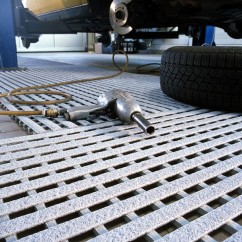
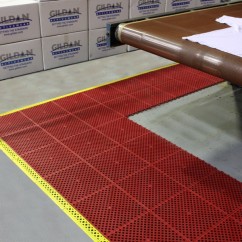
Open-grid duckboard matting is designed for areas where liquids are expected. The grid structure allows spillages to drain away rather than pooling on the walking surface. This approach is commonly used in workshops, wet processing areas, packing zones, and around machinery where coolant or water may be present. A grid-welded PVC construction is often used for durability and flexibility, and many products are supplied in roll form so you can cover long walkways quickly.

Products on this page that fit this type:

  • Interflex Grip – An open-grid duckboard style mat designed to provide traction while allowing liquids to drain through. Useful for wet or contaminated floors where you want a stable, drain-through walking surface.
  • Kumfi Tile – A connectable tile system with a grip surface. Interlocking tiles are helpful when you need to cover irregular footprints, create modular work zones, or replace individual sections without lifting an entire run.

Where it tends to work best: washdown zones, entrances to wet production areas, around sinks and cleaning stations, near machine tools using coolant, and along routes where water is tracked in.

Key specification notes: consider thickness (for comfort and drainage capacity), grid openness (drainage vs. heel stability), and whether edges need ramping to reduce trip risk at transitions.

2) Anti-slip anti-fatigue mats (comfort + traction for standing work)

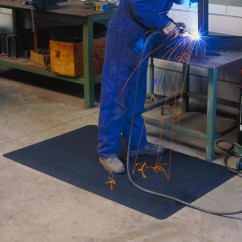
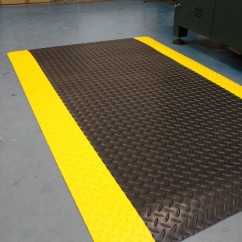
In many industrial settings, the slip hazard is not only liquid on the floor but also fatigue from prolonged standing. Anti-fatigue mats with slip-resistant surfaces are designed to provide a more comfortable standing platform while maintaining traction. They are commonly used at workstations, packing benches, inspection points, and assembly lines where operators stand in a defined area for long periods.

Products on this page that fit this type:

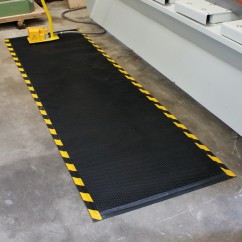
  • Happy Feet – A mat intended to combine underfoot comfort with a slip-resistant surface, suited to standing tasks where workers need stable footing.
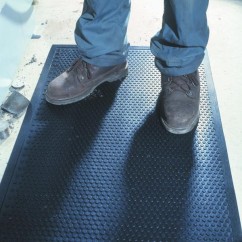
  • Kumfi Tough – A cushioned mat with a more robust top surface pattern, designed for demanding workstation use where durability and traction are priorities.
  • Ergomax Super – A heavily cushioned comfort mat for areas where extended standing is common and additional support is beneficial.

Where it tends to work best: fixed work positions, production cells, quality control stations, and packing lines—especially where the floor is hard and operators stand for long periods.

Key specification notes: match the mat’s surface and base to the contamination present (dry dust vs. occasional splashes), and ensure edges are bevelled or ramped where foot traffic crosses the perimeter.

3) Static-control anti-slip mats (traction with ESD considerations)

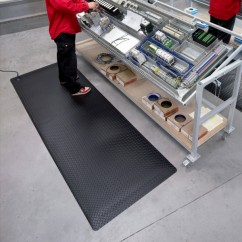
Some environments require both slip resistance and electrostatic discharge (ESD) control. In electronics assembly, test areas, or locations with sensitive components, matting may need to dissipate static while still providing a stable, slip-resistant standing surface. In these cases, it’s important to treat the mat as part of a broader ESD control system (flooring, footwear, grounding, and procedures).

Products on this page that fit this type:

  • ESD Kumfi Tough – A static-dissipative anti-fatigue mat designed for areas where ESD control is required alongside secure footing.

Where it tends to work best: electronics workstations, inspection benches, and assembly areas where static control is specified.

Key specification notes: confirm the required ESD performance level for your process and ensure cleaning methods do not leave insulating residues that reduce effectiveness.

4) Scraper / traction mats for entrances and transition points

Slip risk often increases at transitions—doorways, entrances to production areas, or points where people move from outdoors to indoors. Scraper-style mats help remove debris and moisture from footwear, reducing contamination carried onto smooth floors. In industrial settings, these mats can also help reduce the spread of fine dust or grit that can act like “ball bearings” underfoot.

Products on this page that fit this type:

  • Safety Scrape – A scraper-style mat intended to improve traction and reduce tracked-in contamination at entrances or transition points.

5) Hard-wearing anti-slip mats for general-purpose coverage

Where drainage is not the main requirement, a hard-wearing anti-slip mat can provide a straightforward traction upgrade for walkways and general floor areas. These mats typically rely on surface texture and stable backing to reduce slip risk on dry or lightly contaminated floors.

Products on this page that fit this type:

  • Texture Top – A hard-wearing mat with a textured surface designed to improve grip in general industrial use.

Case Study: Reducing Slip Risk in a Wet Packing Area

Scenario: A packing area experiences frequent small spillages from rinsed containers and routine floor cleaning. The smooth floor becomes slippery during peak periods, and staff move quickly between benches and pallet staging.

Challenges identified:

  • Water film on the floor during busy periods.
  • Foot traffic concentrated along a narrow route between stations.
  • Cleaning needed to remain simple and fast at shift change.

Approach: The team mapped the highest-traffic route and installed drain-through matting along the main walkway so water could pass through rather than remain on the surface. At fixed work positions, cushioned anti-fatigue mats were added to improve comfort and reduce the tendency for workers to shift stance onto adjacent slippery floor areas.

Outcome (practical): The walking surface remained more consistent during wet periods, and cleaning became more predictable because liquids were managed by the mat structure rather than spreading across the route. The combination of drainage in walkways and cushioning at stations addressed both traction and standing comfort.

How to Choose the Correct Anti-slip Mats

Step 1: Identify the contamination type

  • Water / washdown: open-grid duckboard matting is often effective because it separates feet from liquid and allows drainage.
  • Oils / coolants: look for mats designed for industrial contamination and consider how you will clean the surface and the floor beneath.
  • Dry dust / powders: textured, hard-wearing mats can improve traction, but maintenance is critical—fine dust can reduce grip if it builds up.

Step 2: Match the mat to the task (standing vs. walking)

  • Standing workstations: anti-fatigue mats with slip-resistant surfaces help reduce discomfort and maintain stable footing.
  • Walkways and routes: roll-out matting and open-grid runners can cover longer distances and help manage tracked-in moisture.

Step 3: Consider traffic and equipment

  • Pedestrian-only: most anti-slip mats are suitable, but ensure edges are safe and the mat lies flat.
  • Trolleys and pallet trucks: check whether the mat thickness and surface pattern will impede wheels. In some cases, defining pedestrian walkways with matting and keeping wheeled routes clear is the safer option.

Step 4: Manage edges and transitions to reduce trips

Anti-slip matting reduces slips, but poorly managed edges can introduce trip hazards. Where people cross onto and off the mat frequently, choose mats with bevelled edges or plan edge treatments. Ensure mats are sized so they do not curl at corners or sit in door swing paths.

Step 5: Plan cleaning and inspection

Even the best matting can lose effectiveness if it is not maintained. Build a simple routine:

  • Daily: remove loose debris; check for edge lift, movement, or damage.
  • Weekly: wash or scrub as appropriate for the contamination; ensure the floor beneath open-grid matting is also cleaned.
  • After incidents: review whether the mat type and placement match the actual spill pattern and traffic flow.

Installation and Layout Tips

Cutting and fitting

Roll matting is often trimmed to fit. Use straight cuts for clean edges and ensure the mat sits flat without tension. For modular tile systems, plan the layout so seams do not fall directly in the highest pivot points where people turn frequently.

Coverage strategy

  • Target the source: place drainage matting where liquids land or are tracked in.
  • Create safe routes: use runners to define pedestrian walkways through wet or busy zones.
  • Support the workstation: add anti-fatigue mats where standing is concentrated.

Environmental considerations

Temperature swings, UV exposure, and chemical contact can affect mat performance and lifespan. If mats are used near doors, loading bays, or areas with frequent chemical use, confirm the mat material is appropriate and monitor for hardening, cracking, or loss of flexibility.

Common Mistakes to Avoid

  • Using closed-surface mats in persistent wet areas: if water cannot drain, the surface can remain slippery unless cleaning is extremely frequent.
  • Ignoring the floor beneath open-grid matting: drainage mats reduce surface liquid, but the underlying floor still needs cleaning to prevent residue build-up and odours.
  • Undersizing workstation mats: if the mat is too small, workers step on and off repeatedly, increasing transition risk.
  • Placing mats where they can shift: movement can create edge lift and trip hazards; ensure the mat is stable for the floor type and traffic.

Frequently Asked Questions (Q&A)

What is the difference between open-grid duckboard matting and a solid anti-slip mat?

Open-grid duckboard matting lets liquids drain through the surface, helping keep the walking area drier underfoot. Solid anti-slip mats rely mainly on surface texture and backing grip. Choose open-grid for persistent wetness; choose solid mats for mostly dry floors.

Can anti-slip mats be used in areas with oils or coolants?

Yes, but selection and maintenance matter. In oily or coolant-prone areas, choose matting designed for industrial contamination and clean it regularly to prevent a slippery film. Also consider drainage designs where liquids are frequent, and ensure edges remain secure.

How do I reduce trip hazards when installing anti-slip matting?

Use mats that lie flat and manage transitions carefully. Prefer bevelled edges where foot traffic crosses the perimeter, avoid placing mats in door swing paths, and ensure corners do not curl. Regular inspections help catch movement or edge lift early.

Do anti-fatigue mats also improve slip resistance?

Many anti-fatigue mats include textured, slip-resistant top surfaces, so they can improve traction while reducing discomfort from standing. However, performance depends on contamination and cleaning. For persistent wetness, a drainage-style mat may be more effective than cushioning alone.

How should anti-slip mats be cleaned to maintain grip?

Remove loose debris frequently and wash or scrub the surface based on the contamination present. Avoid leaving detergent residues that can reduce friction. For open-grid matting, clean both the mat and the floor beneath it so drained liquids and residues do not accumulate.


Anti-slip Mats for Industrial Floors: Practical Guidance for Safer Walkways

Anti-slip mats are used to improve underfoot grip where floors can become slippery due to water, oils, coolants, dust, or routine cleaning. In industrial environments, the goal is usually twofold: reduce slip risk and keep people moving efficiently through work areas. The products in this category cover several common approaches, including open-grid “duckboard” style rolls that allow liquids to drain away, and cushioned anti-fatigue mats that combine comfort with a slip-resistant surface.

Because slip hazards vary by location, the most effective matting choice depends on what is on the floor (water, grease, swarf, powders), how it gets there (splashes, washdown, foot traffic), and what the traffic looks like (pedestrians, trolleys, pallet trucks). This guide explains how anti-slip matting works, where each type fits best, and how to specify, install, and maintain mats so they continue to perform over time.

Anti-slip Mats — Helpful Guide

Anti-slip matting generally improves traction in one (or more) of these ways:

  • Surface texture: raised patterns or etched finishes increase friction between footwear and the mat.
  • Drainage and separation: open-grid designs lift feet above liquids and allow spillages to drain through, reducing the “film” that causes slips.
  • Stable underfoot support: mats with good lay-flat characteristics and appropriate weight reduce movement and edge lift that can contribute to trips.
  • Fatigue reduction: resilient materials reduce discomfort during standing tasks, which can indirectly improve safe movement and posture.

1) Open-grid / duckboard anti-slip matting (drain-through)

Open-grid duckboard matting is designed for areas where liquids are expected. The grid structure allows spillages to drain away rather than pooling on the walking surface. This approach is commonly used in workshops, wet processing areas, packing zones, and around machinery where coolant or water may be present. A grid-welded PVC construction is often used for durability and flexibility, and many products are supplied in roll form so you can cover long walkways quickly.

Products on this page that fit this type:

  • Interflex Grip – An open-grid duckboard style mat designed to provide traction while allowing liquids to drain through. Useful for wet or contaminated floors where you want a stable, drain-through walking surface.
  • Kumfi Tile – A connectable tile system with a grip surface. Interlocking tiles are helpful when you need to cover irregular footprints, create modular work zones, or replace individual sections without lifting an entire run.

Where it tends to work best: washdown zones, entrances to wet production areas, around sinks and cleaning stations, near machine tools using coolant, and along routes where water is tracked in.

Key specification notes: consider thickness (for comfort and drainage capacity), grid openness (drainage vs. heel stability), and whether edges need ramping to reduce trip risk at transitions.

2) Anti-slip anti-fatigue mats (comfort + traction for standing work)

In many industrial settings, the slip hazard is not only liquid on the floor but also fatigue from prolonged standing. Anti-fatigue mats with slip-resistant surfaces are designed to provide a more comfortable standing platform while maintaining traction. They are commonly used at workstations, packing benches, inspection points, and assembly lines where operators stand in a defined area for long periods.

Products on this page that fit this type:

  • Happy Feet – A mat intended to combine underfoot comfort with a slip-resistant surface, suited to standing tasks where workers need stable footing.
  • Kumfi Tough – A cushioned mat with a more robust top surface pattern, designed for demanding workstation use where durability and traction are priorities.
  • Ergomax Super – A heavily cushioned comfort mat for areas where extended standing is common and additional support is beneficial.

Where it tends to work best: fixed work positions, production cells, quality control stations, and packing lines—especially where the floor is hard and operators stand for long periods.

Key specification notes: match the mat’s surface and base to the contamination present (dry dust vs. occasional splashes), and ensure edges are bevelled or ramped where foot traffic crosses the perimeter.

3) Static-control anti-slip mats (traction with ESD considerations)

Some environments require both slip resistance and electrostatic discharge (ESD) control. In electronics assembly, test areas, or locations with sensitive components, matting may need to dissipate static while still providing a stable, slip-resistant standing surface. In these cases, it’s important to treat the mat as part of a broader ESD control system (flooring, footwear, grounding, and procedures).

Products on this page that fit this type:

  • ESD Kumfi Tough – A static-dissipative anti-fatigue mat designed for areas where ESD control is required alongside secure footing.

Where it tends to work best: electronics workstations, inspection benches, and assembly areas where static control is specified.

Key specification notes: confirm the required ESD performance level for your process and ensure cleaning methods do not leave insulating residues that reduce effectiveness.

4) Scraper / traction mats for entrances and transition points

Slip risk often increases at transitions—doorways, entrances to production areas, or points where people move from outdoors to indoors. Scraper-style mats help remove debris and moisture from footwear, reducing contamination carried onto smooth floors. In industrial settings, these mats can also help reduce the spread of fine dust or grit that can act like “ball bearings” underfoot.

Products on this page that fit this type:

  • Safety Scrape – A scraper-style mat intended to improve traction and reduce tracked-in contamination at entrances or transition points.

5) Hard-wearing anti-slip mats for general-purpose coverage

Where drainage is not the main requirement, a hard-wearing anti-slip mat can provide a straightforward traction upgrade for walkways and general floor areas. These mats typically rely on surface texture and stable backing to reduce slip risk on dry or lightly contaminated floors.

Products on this page that fit this type:

  • Texture Top – A hard-wearing mat with a textured surface designed to improve grip in general industrial use.

Case Study: Reducing Slip Risk in a Wet Packing Area

Scenario: A packing area experiences frequent small spillages from rinsed containers and routine floor cleaning. The smooth floor becomes slippery during peak periods, and staff move quickly between benches and pallet staging.

Challenges identified:

  • Water film on the floor during busy periods.
  • Foot traffic concentrated along a narrow route between stations.
  • Cleaning needed to remain simple and fast at shift change.

Approach: The team mapped the highest-traffic route and installed drain-through matting along the main walkway so water could pass through rather than remain on the surface. At fixed work positions, cushioned anti-fatigue mats were added to improve comfort and reduce the tendency for workers to shift stance onto adjacent slippery floor areas.

Outcome (practical): The walking surface remained more consistent during wet periods, and cleaning became more predictable because liquids were managed by the mat structure rather than spreading across the route. The combination of drainage in walkways and cushioning at stations addressed both traction and standing comfort.

How to Choose the Correct Anti-slip Mats

Step 1: Identify the contamination type

  • Water / washdown: open-grid duckboard matting is often effective because it separates feet from liquid and allows drainage.
  • Oils / coolants: look for mats designed for industrial contamination and consider how you will clean the surface and the floor beneath.
  • Dry dust / powders: textured, hard-wearing mats can improve traction, but maintenance is critical—fine dust can reduce grip if it builds up.

Step 2: Match the mat to the task (standing vs. walking)

  • Standing workstations: anti-fatigue mats with slip-resistant surfaces help reduce discomfort and maintain stable footing.
  • Walkways and routes: roll-out matting and open-grid runners can cover longer distances and help manage tracked-in moisture.

Step 3: Consider traffic and equipment

  • Pedestrian-only: most anti-slip mats are suitable, but ensure edges are safe and the mat lies flat.
  • Trolleys and pallet trucks: check whether the mat thickness and surface pattern will impede wheels. In some cases, defining pedestrian walkways with matting and keeping wheeled routes clear is the safer option.

Step 4: Manage edges and transitions to reduce trips

Anti-slip matting reduces slips, but poorly managed edges can introduce trip hazards. Where people cross onto and off the mat frequently, choose mats with bevelled edges or plan edge treatments. Ensure mats are sized so they do not curl at corners or sit in door swing paths.

Step 5: Plan cleaning and inspection

Even the best matting can lose effectiveness if it is not maintained. Build a simple routine:

  • Daily: remove loose debris; check for edge lift, movement, or damage.
  • Weekly: wash or scrub as appropriate for the contamination; ensure the floor beneath open-grid matting is also cleaned.
  • After incidents: review whether the mat type and placement match the actual spill pattern and traffic flow.

Installation and Layout Tips

Cutting and fitting

Roll matting is often trimmed to fit. Use straight cuts for clean edges and ensure the mat sits flat without tension. For modular tile systems, plan the layout so seams do not fall directly in the highest pivot points where people turn frequently.

Coverage strategy

  • Target the source: place drainage matting where liquids land or are tracked in.
  • Create safe routes: use runners to define pedestrian walkways through wet or busy zones.
  • Support the workstation: add anti-fatigue mats where standing is concentrated.

Environmental considerations

Temperature swings, UV exposure, and chemical contact can affect mat performance and lifespan. If mats are used near doors, loading bays, or areas with frequent chemical use, confirm the mat material is appropriate and monitor for hardening, cracking, or loss of flexibility.

Common Mistakes to Avoid

  • Using closed-surface mats in persistent wet areas: if water cannot drain, the surface can remain slippery unless cleaning is extremely frequent.
  • Ignoring the floor beneath open-grid matting: drainage mats reduce surface liquid, but the underlying floor still needs cleaning to prevent residue build-up and odours.
  • Undersizing workstation mats: if the mat is too small, workers step on and off repeatedly, increasing transition risk.
  • Placing mats where they can shift: movement can create edge lift and trip hazards; ensure the mat is stable for the floor type and traffic.

Frequently Asked Questions (Q&A)

What is the difference between open-grid duckboard matting and a solid anti-slip mat?

Open-grid duckboard matting lets liquids drain through the surface, helping keep the walking area drier underfoot. Solid anti-slip mats rely mainly on surface texture and backing grip. Choose open-grid for persistent wetness; choose solid mats for mostly dry floors.

Can anti-slip mats be used in areas with oils or coolants?

Yes, but selection and maintenance matter. In oily or coolant-prone areas, choose matting designed for industrial contamination and clean it regularly to prevent a slippery film. Also consider drainage designs where liquids are frequent, and ensure edges remain secure.

How do I reduce trip hazards when installing anti-slip matting?

Use mats that lie flat and manage transitions carefully. Prefer bevelled edges where foot traffic crosses the perimeter, avoid placing mats in door swing paths, and ensure corners do not curl. Regular inspections help catch movement or edge lift early.

Do anti-fatigue mats also improve slip resistance?

Many anti-fatigue mats include textured, slip-resistant top surfaces, so they can improve traction while reducing discomfort from standing. However, performance depends on contamination and cleaning. For persistent wetness, a drainage-style mat may be more effective than cushioning alone.

How should anti-slip mats be cleaned to maintain grip?

Remove loose debris frequently and wash or scrub the surface based on the contamination present. Avoid leaving detergent residues that can reduce friction. For open-grid matting, clean both the mat and the floor beneath it so drained liquids and residues do not accumulate.

Accept Cookies