033 3567 3567  sales@everymat.com

payments

My Cart:

0 item(s) £0.00
You have no items in your shopping cart.

Welding and Heat Resistant Mats

3 Item(s)

Grid  List 

Set Descending Direction

3 Item(s)

Grid  List 

Set Descending Direction
5 Benefits of Using Welding Mats in Your Workshop

Welding can be a dangerous job, and it's important to take steps to protect yourself and your workspace. One way to do this is by using welding mats. These mats offer a variety of benefits, from protecting your floors to improving safety in your workshop. Here are the top 5 benefits of using welding mats in your workspace.

Prevent Slips and Falls.

Welding mats are designed to be slip-resistant, which can help prevent accidents in your workshop. The mats have a textured surface that provides traction, even when they are slightly wet or covered in small amounts of debris. This can be especially important in areas where water or oil may be present, as these substances can make floors slippery and increase the risk of falls. By using welding mats, you can create a safer workspace for yourself and your employees.

Protect Floors from Damage.

One of the top benefits of using welding mats in your workshop is that they can protect your floors from damage. Welding can create sparks and debris that can damage concrete or other flooring materials. By placing welding mats in areas where welding will take place, you can prevent damage to your floors and save money on repairs. Additionally, welding mats are easy to clean and can be reused, making them a cost-effective solution for protecting your floors.

Easy to Install

Another benefit of using welding mats in your workshop is that they are very easy to install and move around. Unlike permanent flooring solutions, welding mats can be placed and removed as needed, allowing you to customize your workspace for different projects. This flexibility also makes it easier to clean and maintain your workshop, as you can simply move the mats to access hard-to-reach areas, and then sweep and clean the floor.

Improve Comfort for Workers.

Using welding mats in your workshop can also improve comfort for workers who spend long hours standing or kneeling. The anti fatigue cushioned material under the top surface of the mats provides a more comfortable floor area, reducing fatigue and discomfort. This can lead to increased productivity and a happier, healthier workforce. Additionally, the mats can help reduce the risk of injuries from slips, trips, and falls, further improving safety in the workplace.

Easy to Clean and Maintain.

One of the top benefits of using welding mats in your workshop is that they are easy to clean and maintain. Unlike traditional flooring options, such as concrete or tile, welding mats can be quickly and easily cleaned with a simple mop or broom. This not only saves time and effort, but it also helps to maintain a clean and safe work environment. Additionally, welding mats are resistant to chemicals and oils, making them ideal for use in workshops where these substances are commonly used. We would recommend using the relevant spill removal kit to remove chemicals and oils before mopping or sweeping with a broom.

Welding and heat resistant mats are designed to help manage common workshop risks around hot work: sparks and spatter, hot offcuts, slippery floors, and long periods of standing. Used correctly, they can protect the underlying floor, improve footing, and add a layer of comfort where operators work at fixed stations.

Welding and Heat Resistant Mats — Helpful Guide

This category includes three mat options that can be used in and around welding bays, fabrication benches, maintenance areas, and general workshops. While each product has its own strengths, they share a practical goal: creating a safer, more controlled standing surface where heat, debris, and movement are part of the job.

Types of mats in this category

  • Heat and spark tolerant workstation mats for welding bays and hot-work zones where spatter may land on the floor.
  • Anti-slip industrial mats for improving traction in areas that may see dust, light debris, or occasional moisture.
  • Comfort-focused standing mats for reducing fatigue where people stand for extended periods.

1) Heat and spark tolerant workstation mats

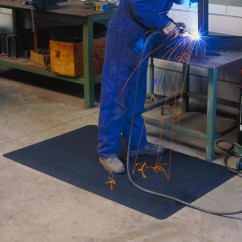
In welding areas, the floor is exposed to hot spatter, small offcuts, and abrasive debris. A suitable mat helps reduce the chance of hot material damaging the floor surface and can also improve grip underfoot. In practice, these mats are often positioned directly in front of the welding bench, around jigs, or along the operator’s typical stance line.

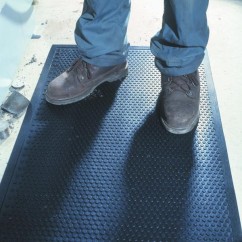
  • Texture Top — A hard-wearing mat with a textured surface intended to improve traction. It can be used as a defined standing zone in workshop areas where slip resistance and durability are priorities.
  • Safety Scrape — A robust anti-slip mat designed to provide grip and help manage surface contamination such as dust and small debris. It is commonly used where footwear needs extra traction and where the floor may be prone to becoming slick.

Note: “Heat resistant” can mean different things depending on the product and the type of heat exposure (brief contact with hot spatter vs. sustained contact with hot metal). For welding bays, it is important to match the mat to the expected exposure and housekeeping routine.

2) Anti-slip mats for workshop walkways and general areas

Not every area around a welding bay needs a specialist hot-work surface. Many workshops benefit from anti-slip matting in adjacent walkways, tool stations, and inspection points where dust, overspray, or occasional moisture can reduce traction. Anti-slip mats can also help define pedestrian routes and standing positions, supporting tidier workflows.

  • Safety Scrape — Useful where traction is the main requirement and where the surface may collect debris that needs regular cleaning.
  • Texture Top — Suitable for general industrial use where a durable, grippy surface is needed underfoot.

3) Comfort-focused standing mats (anti-fatigue support)

Welding and fabrication work often involves long periods of standing in a relatively fixed posture. Over time, hard floors can contribute to discomfort and fatigue. Anti-fatigue mats add cushioning that encourages subtle muscle movement, which can help reduce perceived strain during extended standing tasks.

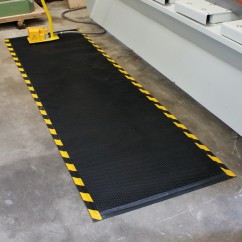
  • Happy Feet — An anti-slip, fatigue-reducing mat intended for standing comfort in work areas. It can be positioned at benches, inspection stations, packing points, or any location where operators stand for long periods.

Case Study: Improving a Welding Bay Work Zone

A small fabrication workshop had two recurring issues: (1) minor floor damage and burn marks near the welding bench from spatter and hot offcuts, and (2) operator discomfort during longer runs of repetitive work. The team also noticed that dust and fine debris made the immediate area around the bench feel less secure underfoot.

The workshop introduced a simple zoning approach:

  • A defined standing area directly in front of the bench using a durable, high-traction mat surface.
  • A comfort-focused mat at the primary stance position where the operator spent most of the shift.
  • Regular housekeeping: sweeping at set intervals and quick checks for embedded debris.

After implementation, the floor surface around the bench was easier to keep in good condition, and operators reported improved comfort during longer tasks. The biggest improvement came from treating matting as part of the work process (placement, cleaning, and replacement planning), rather than a one-time add-on.

How to Choose the Correct Welding and Heat Resistant Mats

Choosing the right mat is mainly about matching the mat’s surface and construction to the hazards you actually have. Use the checklist below to narrow down what matters most in your workshop.

Step 1: Identify the primary hazard

  • Sparks and spatter: Prioritise a mat intended for hot-work zones and place it where spatter is most likely to land.
  • Slips and loss of traction: Choose a mat with a surface designed for grip and plan a cleaning routine to prevent debris build-up.
  • Standing fatigue: Choose an anti-fatigue mat for the operator’s stance position, especially at benches and fixed workstations.

Step 2: Consider the work pattern and layout

Single-station welding often benefits from a dedicated standing mat placed precisely where the operator stands. Larger bays may need multiple mats to cover the stance zone, turning area, and adjacent walkway. If you are using more than one mat, aim to avoid creating trip edges by aligning mats neatly and keeping transitions predictable.

Step 3: Check the floor conditions

Concrete floors can be abrasive and may accelerate wear on some mat types. Painted floors may be more sensitive to heat marks and scuffs. If the area is occasionally wet or oily, traction and cleaning become even more important. In these cases, plan for frequent cleaning and consider whether the mat needs to be moved for floor maintenance.

Step 4: Decide on thickness and edge profile

Thicker mats can improve comfort but may increase the risk of catching a toe at the edge if not managed well. Where people move trolleys or step on and off frequently, a lower-profile mat or a carefully positioned mat edge can reduce trip risk. Always keep edges visible and avoid placing mats where they will curl or lift.

Step 5: Plan cleaning and inspection

Even the best mat becomes less effective if debris builds up on the surface. In welding areas, small metal fragments can embed or sit on top of the mat and create uneven footing. A practical routine is:

  • Quick sweep at the start of the shift.
  • Spot-clean during breaks (especially after grinding).
  • End-of-day sweep and visual inspection for damage.

Installation and Placement Tips (Practical Workshop Guidance)

Most workshop mats are straightforward to deploy, but placement makes a big difference to safety and usability.

  • Place mats where people actually stand rather than trying to cover the entire bay. Start with the stance zone and expand only if needed.
  • Keep mat edges out of main traffic lines where possible. If a walkway must cross a mat edge, keep the crossing angle predictable and the edge clear of debris.
  • Allow clearance for doors, drawers, and foot pedals so the mat does not interfere with equipment operation.
  • Use mats to support housekeeping by defining “clean zones” around benches and inspection points.

Common Mistakes to Avoid

  • Assuming all “heat resistant” mats behave the same: heat exposure varies (brief spatter vs. sustained contact). Match the mat to the real exposure.
  • Ignoring debris management: grinding dust and metal fragments reduce traction and can damage mat surfaces over time.
  • Creating trip edges: poor placement, curled corners, or uneven transitions can introduce new hazards.
  • Over-matting: covering too much area can make cleaning harder and may trap debris where it is not noticed.

Where These Mats Are Commonly Used

Welding and heat resistant mats are typically used in environments where hot work and standing tasks overlap:

  • Fabrication and welding bays
  • Maintenance workshops
  • Automotive repair and body shops
  • Manufacturing cells with fixed operator positions
  • Tool rooms and inspection benches

Frequently Asked Questions

Do welding mats fully prevent fire risk from sparks and spatter?

No. A mat can help reduce floor damage and limit the spread of small sparks, but it does not replace hot-work controls. Always follow site procedures for housekeeping, fire watch, and safe storage of flammable materials near welding areas.

What is the difference between a heat resistant mat and an anti-fatigue mat?

Heat resistant mats focus on tolerating hot debris and protecting the floor surface. Anti-fatigue mats focus on comfort by adding cushioning for standing tasks. Some mats combine both features, but you should prioritise the dominant risk in your work area.

Can I use anti-slip mats in areas that get dusty from grinding?

Yes, but performance depends on cleaning. Dust and metal fragments can reduce traction and create uneven footing. Plan a routine to sweep and inspect the mat surface, especially around grinders, cutting stations, and welding benches where debris accumulates quickly.

How should I size and position mats for a welding workstation?

Start by mapping where the operator stands and pivots during typical tasks. Place the mat to cover that stance zone with a small margin for movement. Avoid placing edges in main walkways, and ensure the mat does not interfere with pedals, drawers, or doors.

How often should welding mats be inspected or replaced?

Inspect mats routinely for curling edges, surface damage, embedded debris, and loss of grip. Frequency depends on usage intensity, but a quick daily visual check plus a more thorough weekly inspection is a practical baseline in busy workshops.


Welding and heat resistant mats are designed to help manage common workshop risks around hot work: sparks and spatter, hot offcuts, slippery floors, and long periods of standing. Used correctly, they can protect the underlying floor, improve footing, and add a layer of comfort where operators work at fixed stations.

Welding and Heat Resistant Mats — Helpful Guide

This category includes three mat options that can be used in and around welding bays, fabrication benches, maintenance areas, and general workshops. While each product has its own strengths, they share a practical goal: creating a safer, more controlled standing surface where heat, debris, and movement are part of the job.

Types of mats in this category

  • Heat and spark tolerant workstation mats for welding bays and hot-work zones where spatter may land on the floor.
  • Anti-slip industrial mats for improving traction in areas that may see dust, light debris, or occasional moisture.
  • Comfort-focused standing mats for reducing fatigue where people stand for extended periods.

Heat and spark tolerant workstation mats

In welding areas, the floor is exposed to hot spatter, small offcuts, and abrasive debris. A suitable mat helps reduce the chance of hot material damaging the floor surface and can also improve grip underfoot. In practice, these mats are often positioned directly in front of the welding bench, around jigs, or along the operator’s typical stance line.

  • Texture Top — A hard-wearing mat with a textured surface intended to improve traction. It can be used as a defined standing zone in workshop areas where slip resistance and durability are priorities.
  • Safety Scrape — A robust anti-slip mat designed to provide grip and help manage surface contamination such as dust and small debris. It is commonly used where footwear needs extra traction and where the floor may be prone to becoming slick.

Important: “heat resistant” can mean different things depending on the product and the type of heat exposure (brief contact with hot spatter versus sustained contact with hot metal). For welding bays, match the mat to the expected exposure and housekeeping routine.

Anti-slip mats for workshop walkways and general areas

Not every area around a welding bay needs a specialist hot-work surface. Many workshops benefit from anti-slip matting in adjacent walkways, tool stations, and inspection points where dust, overspray, or occasional moisture can reduce traction. Anti-slip mats can also help define pedestrian routes and standing positions, supporting tidier workflows.

  • Safety Scrape — Useful where traction is the main requirement and where the surface may collect debris that needs regular cleaning.
  • Texture Top — Suitable for general industrial use where a durable, grippy surface is needed underfoot.

Comfort-focused standing mats (anti-fatigue support)

Welding and fabrication work often involves long periods of standing in a relatively fixed posture. Over time, hard floors can contribute to discomfort and fatigue. Anti-fatigue mats add cushioning that encourages subtle muscle movement, which can help reduce perceived strain during extended standing tasks.

  • Happy Feet — An anti-slip, fatigue-reducing mat intended for standing comfort in work areas. It can be positioned at benches, inspection stations, packing points, or any location where operators stand for long periods.

Case Study: Improving a Welding Bay Work Zone

A small fabrication workshop had two recurring issues: (1) minor floor damage and burn marks near the welding bench from spatter and hot offcuts, and (2) operator discomfort during longer runs of repetitive work. The team also noticed that dust and fine debris made the immediate area around the bench feel less secure underfoot.

The workshop introduced a simple zoning approach:

  • A defined standing area directly in front of the bench using a durable, high-traction mat surface.
  • A comfort-focused mat at the primary stance position where the operator spent most of the shift.
  • Regular housekeeping: sweeping at set intervals and quick checks for embedded debris.

After implementation, the floor surface around the bench was easier to keep in good condition, and operators reported improved comfort during longer tasks. The biggest improvement came from treating matting as part of the work process (placement, cleaning, and replacement planning), rather than a one-time add-on.

How to Choose the Correct Welding and Heat Resistant Mats

Choosing the right mat is mainly about matching the mat’s surface and construction to the hazards you actually have. Use the checklist below to narrow down what matters most in your workshop.

1) Identify the primary hazard

  • Sparks and spatter: Prioritise a mat intended for hot-work zones and place it where spatter is most likely to land.
  • Slips and loss of traction: Choose a mat with a surface designed for grip and plan a cleaning routine to prevent debris build-up.
  • Standing fatigue: Choose an anti-fatigue mat for the operator’s stance position, especially at benches and fixed workstations.

2) Consider the work pattern and layout

Single-station welding often benefits from a dedicated standing mat placed precisely where the operator stands. Larger bays may need multiple mats to cover the stance zone, turning area, and adjacent walkway. If you are using more than one mat, avoid creating trip edges by aligning mats neatly and keeping transitions predictable.

3) Check the floor conditions

Concrete floors can be abrasive and may accelerate wear on some mat types. Painted floors may be more sensitive to heat marks and scuffs. If the area is occasionally wet or oily, traction and cleaning become even more important. In these cases, plan for frequent cleaning and consider whether the mat needs to be moved for floor maintenance.

4) Decide on thickness and edge profile

Thicker mats can improve comfort but may increase the risk of catching a toe at the edge if not managed well. Where people move trolleys or step on and off frequently, a lower-profile mat or a carefully positioned mat edge can reduce trip risk. Keep edges visible and avoid placing mats where they will curl or lift.

5) Plan cleaning and inspection

Even the best mat becomes less effective if debris builds up on the surface. In welding areas, small metal fragments can embed or sit on top of the mat and create uneven footing. A practical routine is:

  • Quick sweep at the start of the shift.
  • Spot-clean during breaks (especially after grinding).
  • End-of-day sweep and visual inspection for damage.

Installation and Placement Tips

  • Place mats where people actually stand rather than trying to cover the entire bay. Start with the stance zone and expand only if needed.
  • Keep mat edges out of main traffic lines where possible. If a walkway must cross a mat edge, keep the crossing angle predictable and the edge clear of debris.
  • Allow clearance for doors, drawers, and foot pedals so the mat does not interfere with equipment operation.
  • Use mats to support housekeeping by defining “clean zones” around benches and inspection points.

Common Mistakes to Avoid

  • Assuming all “heat resistant” mats behave the same: heat exposure varies (brief spatter versus sustained contact). Match the mat to the real exposure.
  • Ignoring debris management: grinding dust and metal fragments reduce traction and can damage mat surfaces over time.
  • Creating trip edges: poor placement, curled corners, or uneven transitions can introduce new hazards.
  • Over-matting: covering too much area can make cleaning harder and may trap debris where it is not noticed.

Where These Mats Are Commonly Used

Welding and heat resistant mats are typically used in environments where hot work and standing tasks overlap:

  • Fabrication and welding bays
  • Maintenance workshops
  • Automotive repair and body shops
  • Manufacturing cells with fixed operator positions
  • Tool rooms and inspection benches

Do welding mats fully prevent fire risk from sparks and spatter?

No. A mat can help reduce floor damage and limit the spread of small sparks, but it does not replace hot-work controls. Always follow site procedures for housekeeping, fire watch, and safe storage of flammable materials near welding areas.

What is the difference between a heat resistant mat and an anti-fatigue mat?

Heat resistant mats focus on tolerating hot debris and protecting the floor surface. Anti-fatigue mats focus on comfort by adding cushioning for standing tasks. Some mats combine both features, but you should prioritise the dominant risk in your work area.

Can I use anti-slip mats in areas that get dusty from grinding?

Yes, but performance depends on cleaning. Dust and metal fragments can reduce traction and create uneven footing. Plan a routine to sweep and inspect the mat surface, especially around grinders, cutting stations, and welding benches where debris accumulates quickly.

How should I size and position mats for a welding workstation?

Start by mapping where the operator stands and pivots during typical tasks. Place the mat to cover that stance zone with a small margin for movement. Avoid placing edges in main walkways, and ensure the mat does not interfere with pedals, drawers, or doors.

How often should welding mats be inspected or replaced?

Inspect mats routinely for curling edges, surface damage, embedded debris, and loss of grip. Frequency depends on usage intensity, but a quick daily visual check plus a more thorough weekly inspection is a practical baseline in busy workshops.

Accept Cookies